Balance up coordinati-ON Overview

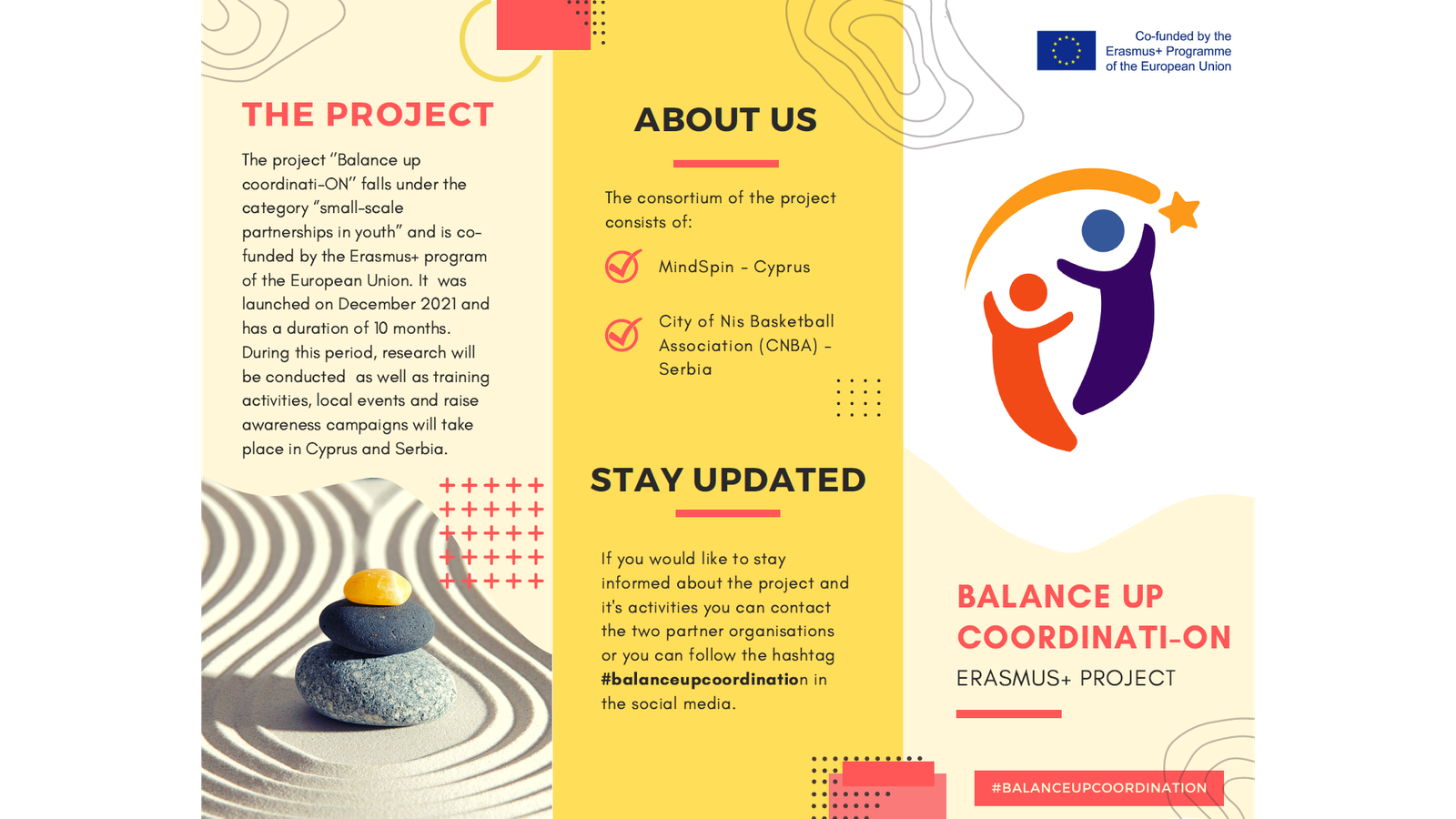
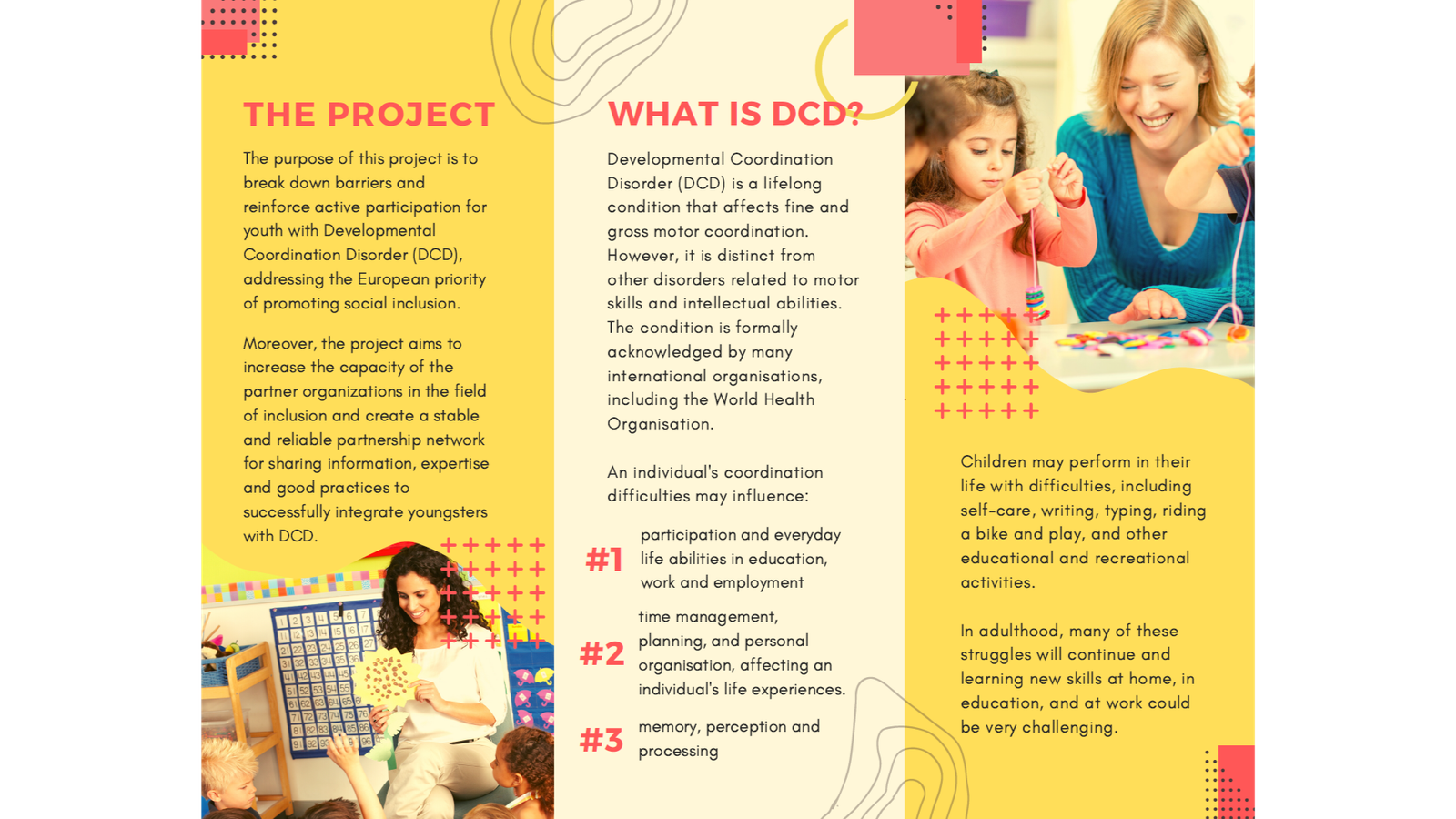
The Balance up coordinati-ON project addresses the critical issue of Developmental Coordination Disorder (DCD) in youth sports. This initiative seeks to raise awareness and build capacity among youth workers and sports organizations to better support young people with DCD. By fostering a network of informed stakeholders, the project aims to create inclusive sports environments that accommodate the needs of all participants.
Key objectives include enhancing the understanding of DCD among educators and coaches, promoting social inclusion, and mapping out local stakeholders who can contribute to the cause. Through targeted campaigns and training sessions, the project not only highlights the challenges faced by youth with DCD but also provides practical strategies for integration into mainstream sports activities.
With a focus on collaboration and knowledge sharing, Balance up coordinati-ON is committed to transforming the perception of DCD in sports and ensuring that all young people have the opportunity to participate fully and confidently.
Key Objectives of Balance up coordinati-ON
Establish a robust network for DCD expertise sharing
Enhance organizational inclusion capabilities
Raise awareness about Developmental Coordination Disorder
Identify local stakeholders working with DCD youth
Promote inclusive sports and youth activities
Develop strategies for DCD integration
Foster community understanding of DCD
Support youth workers in DCD identification
Encourage empathy and support for affected youth
Standardize approaches to DCD challenges
Facilitate knowledge exchange among partners
Implement inclusive practices in sports
Create educational resources for DCD
Strengthen community ties through inclusion
Empower coaches with DCD training
Drive policy change for inclusive sports
Enhance public engagement with DCD issues
Build sustainable inclusion models
Project Activities Overview
The project commenced with a comprehensive setup phase, ensuring all partners were aligned with the objectives. A kick-off meeting was held to establish a unified vision and strategy. Extensive data-based research was conducted to understand the current landscape and identify gaps in DCD inclusion. This was followed by a series of collective learning sessions, aimed at building capacity among youth workers and coaches. An awareness-raising campaign was launched, targeting educators and the general public to increase understanding and empathy for DCD. The project concluded with a final event to celebrate achievements and share outcomes with the broader community.
.
Throughout the project, continuous monitoring and evaluation ensured that activities were on track and objectives were being met. The development of a comprehensive DCD handbook provided a valuable resource for stakeholders, offering practical tips and strategies for inclusion. Dissemination and exploitation activities were carried out to maximize the reach and impact of the project results. The project fostered a collaborative environment, encouraging the exchange of ideas and best practices among partners, ultimately leading to a more inclusive approach to youth sports and activities.
Impact of Balance up coordinati-ON
The Balance up coordinati-ON project is expected to leave a lasting impact on the communities involved. The creation of the DCD handbook will serve as a cornerstone resource, providing comprehensive insights and practical guidance for educators, coaches, and policymakers. By introducing DCD to a wider audience, the project aims to foster greater understanding and empathy, leading to more inclusive community perspectives. The enhanced capacity of youth workers and coaches will enable them to better support youngsters with coordination challenges, ensuring they are integrated into sports programs effectively. The project also aims to establish a network of informed stakeholders committed to promoting inclusion in sports, paving the way for future initiatives and policy changes that support marginalized youth.
This questionnaire is a screening test for adolescents/adults whether they have any traits associated with the DCD
The questions cover different domains associated with the dyspraxia, including organisation, writing and motor skills ability.
A score of 39 – 48 suggests you may have mild dyspraxia traits, but 48+ means you may likely have dyspraxia
How to value responses: Never – 0 pts, Sometimes – 1 pt, Frequently – 2 pts, Always – 3 pts.