Empowering Young with DCD
IncDisBas
101134549
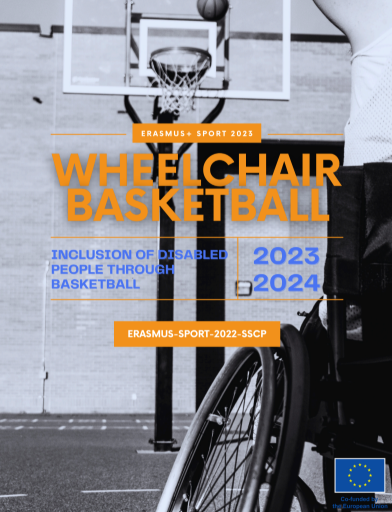
Project Title: IncDisBas – Inclusion of Disabled People Through Basketball
Project Number: 101089467
Project Coordinator: ACTIVE CYPRIOT PROGRAMS AND EUROPEAN LEARNING INTO ACCEPTANCE (Cyprus)
Duration: November 01, 2023 – January 31, 2025
Budget: €60,000
Programme: Erasmus+ Sport
Action Type: Collaborative Partnerships
Topics: Inclusion in sports of disabled people, Basketball for disabled, Inclusion in Sports through basketball
Partners:
- ACTIVE CYPRIOT PROGRAMS AND EUROPEAN LEARNING INTO ACCEPTANCE (Cyprus) – Coordinator
- ASOCIATIA SCOUT SOCIETY (Romania)
- ATHLITIKOS SYLOGOS ATOMON KINITIKA PROVLIMATA NOMOU RODOPIS O IRODIKOS (Greece)
- KOSARKASKI SAVEZ GRADA NISA (Serbia)
Overview
The IncDisBas (Inclusion of Disabled People Through Basketball) project is built on a powerful vision: to build bridges and provide opportunities for people with disabilities to better integrate into their communities through wheelchair basketball. This project directly addresses one of the main objectives of Erasmus+ Sport—increasing the inclusion of people with disabilities in sports while promoting equal opportunities and combating discrimination.
Wheelchair basketball represents more than just a sport; it is a powerful tool for social inclusion, autonomy, and empowerment. For people with mobility challenges, participation in sports can be transformative, improving physical health, mental well-being, social connections, and overall quality of life. However, access to wheelchair basketball and other adaptive sports remains limited in many European regions, and public awareness of these opportunities is often low.
The vision of this project is to build the bridge and provide the opportunity for disabled people to better integrate into the community through wheelchair basketball, in an effort to increase the inclusion of disabled in sports, which is one of the main objectives of ERASMUS+ SPORTS projects, aiming to promote equal opportunities and to face discrimination. As part of the activities of the partner organisations for the promotion and equality of people, the promotion of non-formal education, the integration of young people into society, the reduction and elimination of social exclusion, marginalization, social discrimination, racism and inequalities that exist today in the European society, and mainly, in order to increase and enhance social inclusion and autonomy of Europeans, our Organisation decided to apply for the Erasmus+ Sport (small scale partnership) the project “Inclusion of disabled people through basketball” which focuses on the inclusion of disabled people in sports and especially those who play basketball in wheelchairs. The overall objectives for the project are as follows:
- Introduce the knowledge of wheelchair basketball.
- Increase the participation of people with disabilities in wheelchair basketball.
- Improve participants’ health and well-being.
- The players become role models and inspire other interested people to take up sports.
- Engage and educate more people in the partners’ countries in wheelchair basketball,
- Increase the amount of wheelchair basketball teams in each participating country in the project and in all the MSs through dissemination,
- Promote inclusion through getting involved in different ways in wheelchair basketball.
- Exchange good practises in wheelchair basketball.
- Promote international cooperation networks through wheelchair basketball, as a tool for enhancement of values and citizenship of the people, and strengthen the feeling of positive EU identity.
Led by ACPELIA from Cyprus, this small-scale partnership brings together organizations from Greece, Serbia, and Romania to create lasting impact for people with disabilities through the power of sport.
Key Focus Areas IncDisBas
Knowledge Introduction
Promote early identification of DCD and educate sports professionals on effective support strategies.
Participation Growth
Increase participation of people with disabilities in wheelchair basketball across partner countries.
Health and Wellbeing
Improve participants’ physical health, mental wellbeing, and overall quality of life through sport.
Role Model Development
Enable players to become inspiring role models who motivate others to take up sports.
Good Practice Exchange
Share methodologies, training approaches, and organizational strategies among partners.
Network Expansion
Promote international cooperation and increase wheelchair basketball teams across Europe.
PROJECT ACTIVITIES OVERVIEW
Social inclusion in and through sport (i.a. of disabled people, migrants, vulnerable groups)
Knowledge Introduction and Awareness Building
The project begins with comprehensive activities to introduce wheelchair basketball to communities across partner countries. This includes demonstrations, informational sessions, and engagement with schools, sports clubs, and disability organizations to build awareness of the sport and its benefits.
Training and Skill Development
Practical training sessions are organized for people with disabilities who are interested in trying wheelchair basketball. These sessions are led by experienced coaches and players, providing safe, supportive environments for participants to learn the sport and develop their skills.
Team Formation and Competitions
The project supports the formation of new wheelchair basketball teams in each partner country. These teams participate in friendly competitions and tournaments, both within their countries and internationally, fostering sporting excellence and cross-cultural exchange.
Role Model Development
Experienced wheelchair basketball players are engaged as ambassadors and role models. They share their stories, demonstrate the sport, and inspire others with disabilities to take up sports and challenge societal perceptions about disability.
Good Practice Exchange
Partners regularly share good practices, training methodologies, organizational structures, and lessons learned. This knowledge exchange strengthens the capacity of all partner organizations and ensures the sustainability of wheelchair basketball programs.
Community Engagement
The project actively engages local communities, including families, schools, sports clubs, and local authorities, to build supportive ecosystems for wheelchair basketball. This creates sustainable structures that will continue beyond the project duration.
Results
Inclusion of disabled people