Empowering Young with DCD
Support in Sport
623062-EPP-1-2020-1-RS-SPO-SSCP
Project Title: Support in Sport
Project Number: 623062-EPP-1-2020-1-RS-SPO-SSCP
Project Coordinator: CNBA – Košarkaški Savez Grada Niša (Serbia)
Duration: January 1, 2021 – December 31, 2021
Budget: €30,000
Programme: Erasmus+ Sport
Action Type: Collaborative Partnerships
Topics: Inclusion of people with disabilities in sport, Social inclusion through sport, Early identification and intervention
Partners:
- KOSARKASKI SAVEZ GRADA NISA (Serbia) – Coordinator
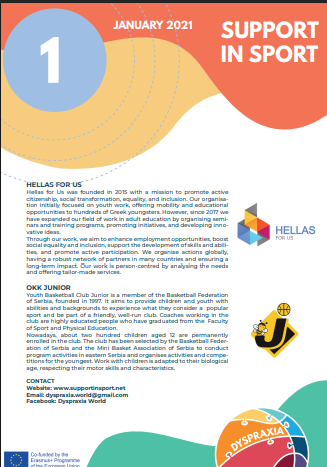
- HELLAS FOR US ASTIKI MI KERDOSKOPIKI MI KYBERNITIKI ETERIA (Greece)
- MINDSPIN LTD (Cyprus)
- ARTEAM (Bulgaria)
- OMLADINSKI KOSARKASKI KLUB JUNIOR (Serbia)
Overview
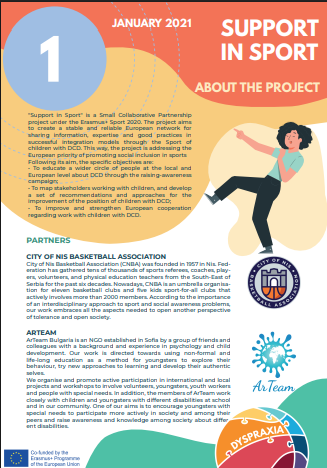
The “Support in Sport” project was CNBA’s pioneering initiative focused on promoting the social inclusion of children with Developmental Coordination Disorder (DCD) and fostering their active participation in sports. This groundbreaking project addressed a critical gap in sports education and inclusion practices across Europe.
Research has shown that the topic of DCD hasn’t been explored in-depth, and there are few appropriate approaches offered for addressing children with DCD in sports settings. Children with coordination challenges often face barriers to participation, leading to social exclusion, reduced physical activity, and lower self-esteem. The “Support in Sport” project tackled this issue head-on by identifying the problem, raising awareness, and creating more suitable programs for supporting these children.
The project brought together partners from three countries to develop practical resources, conduct research, and implement awareness campaigns that continue to benefit sports organizations and families dealing with DCD today.
Key Focus Areas SupPORT
Knowledge Building
Explore and document the realities of DCD across partner countries through research and data collection.
Capacity Strengthening
Enhance organizational capabilities to create inclusive sports environments for children with DCD.
Stakeholder Engagement
Map and empower local actors in sport who work directly with children.
Awareness Campaigns
Implement effective campaigns to educate communities about DCD and its impact.
Resource Development
Create practical tools including journals, factsheets, cards, and brochures for multiple audiences.
Network Building
Foster cooperation among sports actors across Europe for sustained DCD support.
PROJECT ACTIVITIES OVERVIEW
The project followed a structured approach with several key phases:
Networking and Good Practice SharingPartners came together to share existing good practices and experiences in working with children with special needs in sports settings.
Exploration of National Realities
Partners came together to share existing good practices and experiences in working with children with special needs in sports settings.
Data Collection
Comprehensive data was gathered on the challenges faced by children with DCD in sports, the needs of sports professionals, and existing resources.
Mapping and Empowerment of Sports Actors
The project identified and mapped key actors in sport who interact with children, including coaches, PE teachers, and youth workers, and provided them with tools and knowledge.
Stakeholder Engagement:
Relevant stakeholders in local and national communities were identified and included in project activities, creating a network of support.
Awareness Campaign
A comprehensive awareness-raising campaign was executed across all partner countries, targeting multiple audiences.
Results
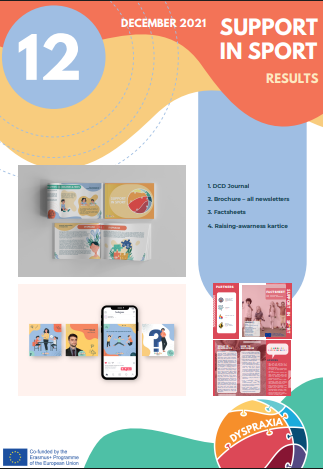
DCD Journal
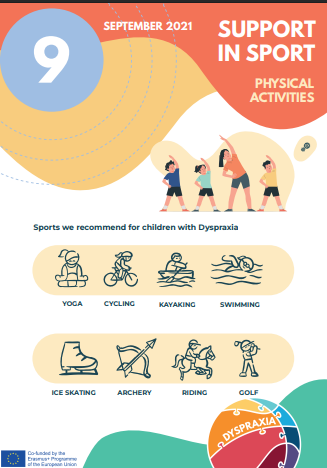
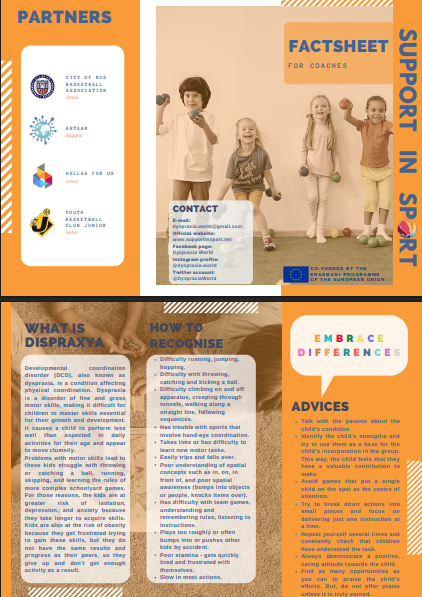
Factsheets Coaches
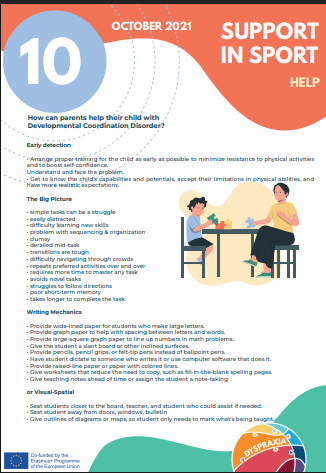
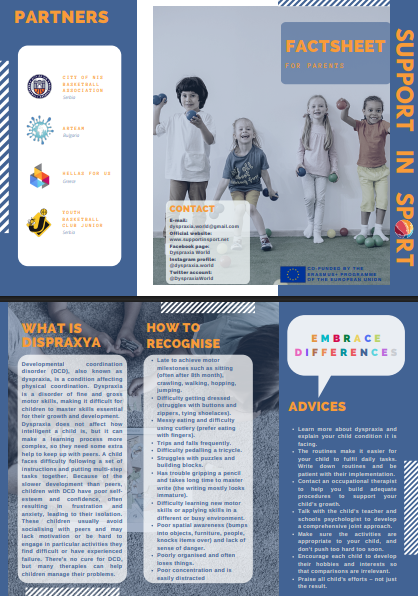
Factsheets Parents
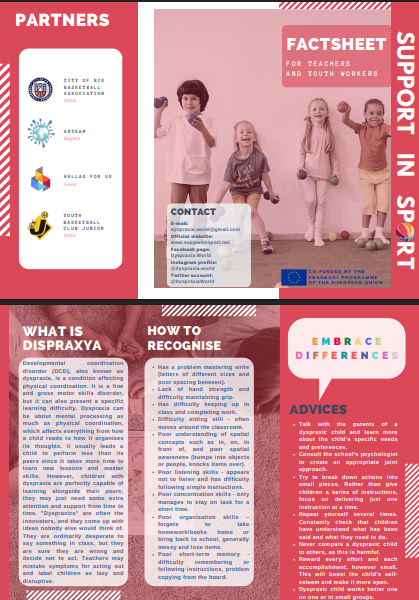
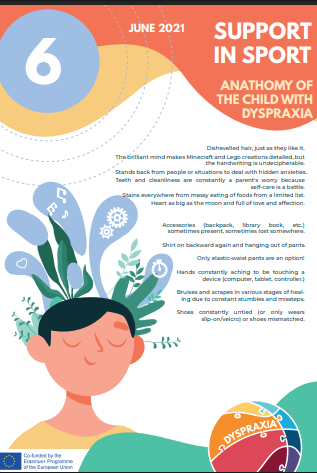
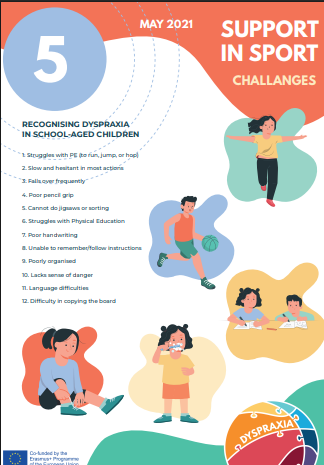
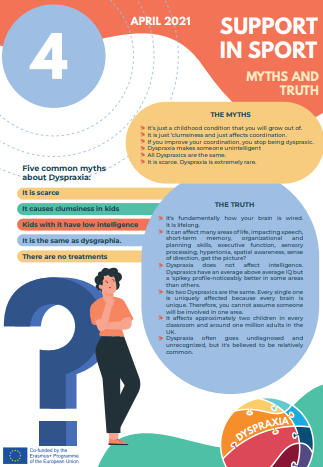
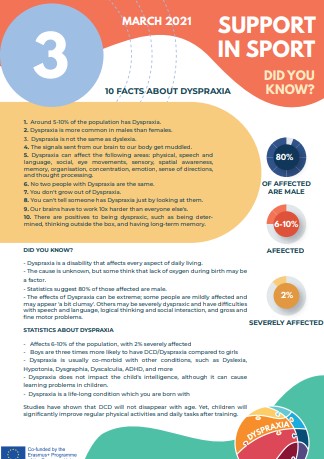
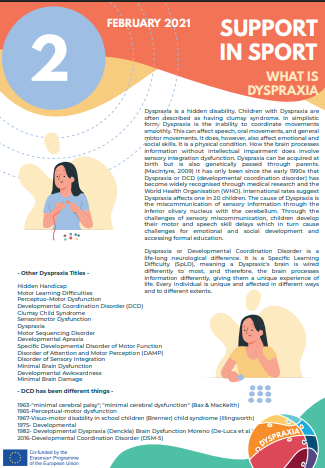
This factsheet aims to inform and raise the wider public’s interest in the needs of children with Dyspraxia.
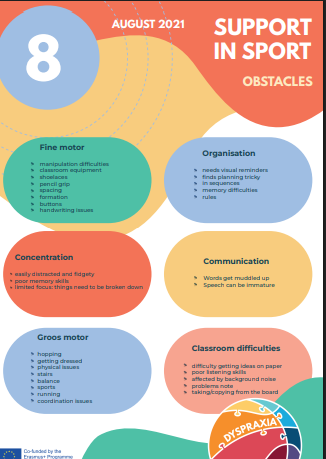
Factsheets Teachers
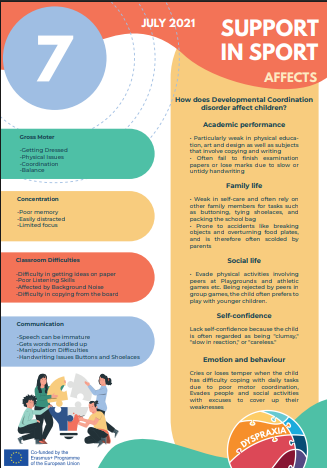
This factsheet aims to inform and raise the wider public’s interest in the needs of children with Dyspraxia.